Why Can a Roof Leak Be Difficult to Find Without a Full Inspection?
A roof leak may seem as though it should be straightforward to locate. If water is appearing on a ceiling or creating a damp patch inside the property, it is natural to assume that the defect must be directly above it. In practice, roof leaks can be considerably more complicated.
Water can enter through one part of the roof and travel along roofing materials, timbers or other surfaces before it becomes visible inside. The obvious symptom may therefore be some distance from the actual point of entry. Without a thorough inspection, there is a risk of treating the wrong area while the original defect remains unresolved.
For homeowners in Shefford, Bedfordshire, DHG Roofing Shefford provides professional roof inspections and repairs focused on finding the source of water ingress before determining the appropriate solution.
Why Does Water Not Always Appear Directly Below a Leak?
Once rainwater gets beneath the external roof covering, gravity does not necessarily take it straight down.
Water can follow the surface of underlay, travel along timbers or move towards joints and openings before eventually dripping into the roof space. From there, it may continue travelling before reaching a ceiling.
This means the damp patch you see indoors is often better regarded as evidence of a leak rather than an exact marker of its location.
A proper roof inspection works backwards from the visible symptoms while examining potential entry points across the surrounding roofing system.
Small Defects Can Let in a Surprising Amount of Water
A roof does not need to have a large hole to develop noticeable water ingress.
Relatively small defects can become vulnerable during prolonged or wind-driven rainfall. Examples include:
- A cracked roof tile
- A slipped or missing tile
- A small flashing defect
- Deterioration around a roof junction
- A problem within a valley
- Loose ridge or hip components
- Defects around penetrations
Some of these problems can be difficult to identify from ground level, particularly when the roof otherwise appears to be in reasonable condition.
Lead Flashing Is a Common Area to Investigate
Lead flashing protects vulnerable junctions where the roof covering meets another part of the building.
If flashing becomes loose, split, lifted or deteriorated, rainwater can find its way behind the surrounding roofing materials. Because these defects may be relatively small, they are not always obvious without closer examination.
A full inspection can assess the condition of the flashing itself as well as the materials immediately surrounding it.
This is particularly important when a leak repeatedly appears near a roof junction but previous repairs have not provided a lasting solution.
Chimney Leaks Can Be Particularly Difficult to Diagnose
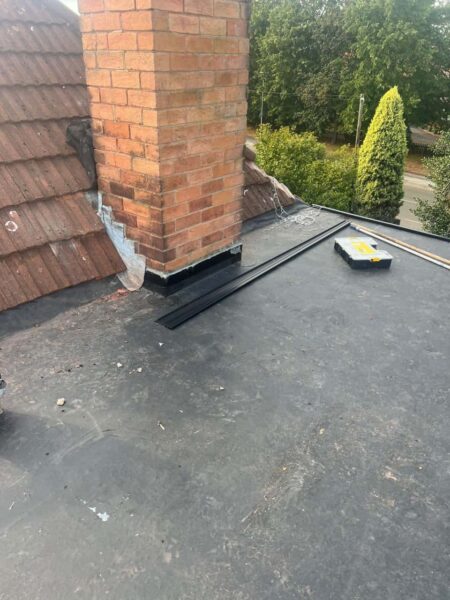
The area surrounding a chimney contains several potential routes for water ingress.
The problem might involve flashing, adjoining tiles, mortar or another part of the chimney-to-roof junction. Water entering on one side can also travel before appearing internally somewhere else.
Simply assuming that one visible section is responsible can therefore result in the true source being missed.
Inspecting the complete chimney area provides a much clearer understanding of how water may be getting into the roofing system.
Roof Valleys Need Careful Examination
Valleys have an important job because they collect and channel rainwater from adjoining roof slopes.
This means they regularly handle significant amounts of water. Deterioration, debris or defects within the valley can potentially allow moisture beneath the surrounding roof covering.
Because water naturally concentrates in these areas, even relatively localised problems deserve attention.
A professional inspection can assess both the valley and the adjoining roofing materials to establish whether either is contributing to the leak.
Wind-Driven Rain Can Make a Leak Intermittent
Some homeowners experience a particularly confusing problem: the roof leaks during certain periods of rain but remains completely dry during others.
Wind direction can help explain this.
During calm rainfall, water may continue flowing down the roof normally. When strong winds accompany the rain, moisture can be pushed towards vulnerable junctions, beneath displaced tiles or into small openings.
This can make the leak seem unpredictable.
Understanding when a leak occurs can provide useful clues, but the affected roof still needs to be examined to identify the precise weakness.
The First Visible Defect May Not Be the Only Problem
Finding one damaged tile does not necessarily mean the investigation should immediately stop.
That tile may indeed be responsible for the leak, but nearby materials could also have deteriorated. Alternatively, the damaged tile might have no connection with the water appearing indoors.
A thorough inspection considers the relationship between visible defects and the reported symptoms.
This is particularly valuable on an older roof where several components may have experienced weathering at different rates.
Previous Repairs Can Complicate Leak Detection
A roof that has been repaired several times may contain materials of different ages and conditions.
When another leak develops, it is important to consider whether:
- A previous repair has deteriorated
- The original problem has returned
- Water is entering from a neighbouring area
- An entirely separate defect has developed
Repeatedly applying another repair to the same general location without investigating the wider roof can result in an ongoing cycle of leaks.
Reviewing previous repair areas as part of a broader inspection can help reveal patterns that would otherwise be missed.
Internal Symptoms Can Help With the Investigation
Although an internal damp patch does not necessarily reveal the exact entry point, it still provides useful information.
Where accessible, examining the roof space can help identify:
- Damp roofing timbers
- Water staining
- Moisture around junctions
- Signs of previous water movement
- Areas where water is dripping or tracking
Combining these internal observations with an external roof assessment can help narrow down the likely source.
The investigation becomes much more effective when the complete route of the water is considered rather than only its final destination.
Why Guessing at Roof Repairs Can Be Ineffective
A repair should address the cause of the leak, not simply the area where water becomes visible.
If the wrong section is repaired, the original opening remains. The leak may then return during the next suitable weather conditions, giving the impression that the repair itself has failed.
Proper diagnosis helps avoid this situation.
Before repair work begins, the aim should be to understand:
- Where water is entering.
- Why that area has become vulnerable.
- Whether surrounding roofing materials are affected.
- What repair will restore reliable weather protection.
This provides a much stronger basis for effective roof repair.
A Full Inspection Can Reveal Whether the Problem Is Localised
One of the other advantages of inspecting the wider roof is determining the extent of deterioration.
Many leaks originate from isolated defects. If the rest of the roof remains sound, a targeted repair may be entirely appropriate.
However, an inspection might reveal several areas of concern, such as widespread tile deterioration, multiple vulnerable junctions or recurring problems around older repairs.
Understanding the overall condition helps ensure the recommended work matches what the roof genuinely requires.
Early Leak Investigation Can Protect the Wider Roof
A minor leak may initially seem manageable, particularly if it only appears during heavy rainfall. However, repeated moisture penetration can expose surrounding roofing components unnecessarily.
Finding and repairing the source early helps protect:
- Roof coverings
- Underlay
- Battens
- Roof timbers
- Insulation
- Internal finishes
The objective is to stop water at the external defect before it has an opportunity to affect a larger area.
Why Professional Roof Inspections Matter
Roof leak detection requires more than spotting an obvious broken tile.
Experienced roofers understand how different roofing components interact and how rainwater can move through a roof once the external covering has been compromised.
A professional assessment can consider tiles or slates, flashing, valleys, ridges, hips, junctions, roof edges and previous repairs together.
This wider perspective is particularly important when a leak has no immediately obvious cause or has continued despite previous attention.
Why Choose DHG Roofing Shefford?
DHG Roofing Shefford provides professional roofing services throughout Shefford, Bedfordshire, including roof inspections, leak investigation, roof repairs and new roofing work.
When investigating a leak, our focus is on identifying the underlying cause before determining what needs repairing. By examining the affected area alongside surrounding roofing components, we can establish whether the problem is isolated or connected to wider deterioration.
This considered approach helps ensure repairs are directed at the source of the problem rather than simply its most visible symptom.
Conclusion
Roof leaks can be difficult to find because water does not necessarily travel directly from the external defect to the visible damp patch below. It can move beneath tiles, follow roofing materials and travel along structural components before finally appearing inside the property.
Small defects in tiles, flashing, valleys, chimney junctions and other roof details can therefore create leaks that are surprisingly difficult to trace without a thorough inspection.
For homeowners in Shefford, Bedfordshire, DHG Roofing Shefford provides professional roof leak investigation and repair services designed to identify the actual cause of water ingress. If you have noticed a new leak or are dealing with one that keeps returning, a professional roof inspection can help establish where the problem begins and what work is required to restore dependable protection.
Why Can a Roof Leak Be Difficult to Find Without a Full Inspection?
A roof leak may seem as though it should be straightforward to locate. If water is appearing on a ceiling or creating a damp patch inside the property, it is natural to assume that the defect must be directly above it. In practice, roof leaks can be considerably more complicated.
Water can enter through one part of the roof and travel along roofing materials, timbers or other surfaces before it becomes visible inside. The obvious symptom may therefore be some distance from the actual point of entry. Without a thorough inspection, there is a risk of treating the wrong area while the original defect remains unresolved.
For homeowners in Shefford, Bedfordshire, DHG Roofing Shefford provides professional roof inspections and repairs focused on finding the source of water ingress before determining the appropriate solution.
Why Does Water Not Always Appear Directly Below a Leak?
Once rainwater gets beneath the external roof covering, gravity does not necessarily take it straight down.
Water can follow the surface of underlay, travel along timbers or move towards joints and openings before eventually dripping into the roof space. From there, it may continue travelling before reaching a ceiling.
This means the damp patch you see indoors is often better regarded as evidence of a leak rather than an exact marker of its location.
A proper roof inspection works backwards from the visible symptoms while examining potential entry points across the surrounding roofing system.
Small Defects Can Let in a Surprising Amount of Water
A roof does not need to have a large hole to develop noticeable water ingress.
Relatively small defects can become vulnerable during prolonged or wind-driven rainfall. Examples include:
- A cracked roof tile
- A slipped or missing tile
- A small flashing defect
- Deterioration around a roof junction
- A problem within a valley
- Loose ridge or hip components
- Defects around penetrations
Some of these problems can be difficult to identify from ground level, particularly when the roof otherwise appears to be in reasonable condition.
Lead Flashing Is a Common Area to Investigate
Lead flashing protects vulnerable junctions where the roof covering meets another part of the building.
If flashing becomes loose, split, lifted or deteriorated, rainwater can find its way behind the surrounding roofing materials. Because these defects may be relatively small, they are not always obvious without closer examination.
A full inspection can assess the condition of the flashing itself as well as the materials immediately surrounding it.
This is particularly important when a leak repeatedly appears near a roof junction but previous repairs have not provided a lasting solution.
Chimney Leaks Can Be Particularly Difficult to Diagnose
The area surrounding a chimney contains several potential routes for water ingress.
The problem might involve flashing, adjoining tiles, mortar or another part of the chimney-to-roof junction. Water entering on one side can also travel before appearing internally somewhere else.
Simply assuming that one visible section is responsible can therefore result in the true source being missed.
Inspecting the complete chimney area provides a much clearer understanding of how water may be getting into the roofing system.
Roof Valleys Need Careful Examination
Valleys have an important job because they collect and channel rainwater from adjoining roof slopes.
This means they regularly handle significant amounts of water. Deterioration, debris or defects within the valley can potentially allow moisture beneath the surrounding roof covering.
Because water naturally concentrates in these areas, even relatively localised problems deserve attention.
A professional inspection can assess both the valley and the adjoining roofing materials to establish whether either is contributing to the leak.
Wind-Driven Rain Can Make a Leak Intermittent
Some homeowners experience a particularly confusing problem: the roof leaks during certain periods of rain but remains completely dry during others.
Wind direction can help explain this.
During calm rainfall, water may continue flowing down the roof normally. When strong winds accompany the rain, moisture can be pushed towards vulnerable junctions, beneath displaced tiles or into small openings.
This can make the leak seem unpredictable.
Understanding when a leak occurs can provide useful clues, but the affected roof still needs to be examined to identify the precise weakness.
The First Visible Defect May Not Be the Only Problem
Finding one damaged tile does not necessarily mean the investigation should immediately stop.
That tile may indeed be responsible for the leak, but nearby materials could also have deteriorated. Alternatively, the damaged tile might have no connection with the water appearing indoors.
A thorough inspection considers the relationship between visible defects and the reported symptoms.
This is particularly valuable on an older roof where several components may have experienced weathering at different rates.
Previous Repairs Can Complicate Leak Detection
A roof that has been repaired several times may contain materials of different ages and conditions.
When another leak develops, it is important to consider whether:
- A previous repair has deteriorated
- The original problem has returned
- Water is entering from a neighbouring area
- An entirely separate defect has developed
Repeatedly applying another repair to the same general location without investigating the wider roof can result in an ongoing cycle of leaks.
Reviewing previous repair areas as part of a broader inspection can help reveal patterns that would otherwise be missed.
Internal Symptoms Can Help With the Investigation
Although an internal damp patch does not necessarily reveal the exact entry point, it still provides useful information.
Where accessible, examining the roof space can help identify:
- Damp roofing timbers
- Water staining
- Moisture around junctions
- Signs of previous water movement
- Areas where water is dripping or tracking
Combining these internal observations with an external roof assessment can help narrow down the likely source.
The investigation becomes much more effective when the complete route of the water is considered rather than only its final destination.
Why Guessing at Roof Repairs Can Be Ineffective
A repair should address the cause of the leak, not simply the area where water becomes visible.
If the wrong section is repaired, the original opening remains. The leak may then return during the next suitable weather conditions, giving the impression that the repair itself has failed.
Proper diagnosis helps avoid this situation.
Before repair work begins, the aim should be to understand:
- Where water is entering.
- Why that area has become vulnerable.
- Whether surrounding roofing materials are affected.
- What repair will restore reliable weather protection.
This provides a much stronger basis for effective roof repair.
A Full Inspection Can Reveal Whether the Problem Is Localised
One of the other advantages of inspecting the wider roof is determining the extent of deterioration.
Many leaks originate from isolated defects. If the rest of the roof remains sound, a targeted repair may be entirely appropriate.
However, an inspection might reveal several areas of concern, such as widespread tile deterioration, multiple vulnerable junctions or recurring problems around older repairs.
Understanding the overall condition helps ensure the recommended work matches what the roof genuinely requires.
Early Leak Investigation Can Protect the Wider Roof
A minor leak may initially seem manageable, particularly if it only appears during heavy rainfall. However, repeated moisture penetration can expose surrounding roofing components unnecessarily.
Finding and repairing the source early helps protect:
- Roof coverings
- Underlay
- Battens
- Roof timbers
- Insulation
- Internal finishes
The objective is to stop water at the external defect before it has an opportunity to affect a larger area.
Why Professional Roof Inspections Matter
Roof leak detection requires more than spotting an obvious broken tile.
Experienced roofers understand how different roofing components interact and how rainwater can move through a roof once the external covering has been compromised.
A professional assessment can consider tiles or slates, flashing, valleys, ridges, hips, junctions, roof edges and previous repairs together.
This wider perspective is particularly important when a leak has no immediately obvious cause or has continued despite previous attention.
Why Choose DHG Roofing Shefford?
DHG Roofing Shefford provides professional roofing services throughout Shefford, Bedfordshire, including roof inspections, leak investigation, roof repairs and new roofing work.
When investigating a leak, our focus is on identifying the underlying cause before determining what needs repairing. By examining the affected area alongside surrounding roofing components, we can establish whether the problem is isolated or connected to wider deterioration.
This considered approach helps ensure repairs are directed at the source of the problem rather than simply its most visible symptom.
Conclusion
Roof leaks can be difficult to find because water does not necessarily travel directly from the external defect to the visible damp patch below. It can move beneath tiles, follow roofing materials and travel along structural components before finally appearing inside the property.
Small defects in tiles, flashing, valleys, chimney junctions and other roof details can therefore create leaks that are surprisingly difficult to trace without a thorough inspection.
For homeowners in Shefford, Bedfordshire, DHG Roofing Shefford provides professional roof leak investigation and repair services designed to identify the actual cause of water ingress. If you have noticed a new leak or are dealing with one that keeps returning, a professional roof inspection can help establish where the problem begins and what work is required to restore dependable protection.
Why Can a Roof Leak Be Difficult to Find Without a Full Inspection?
A roof leak may seem as though it should be straightforward to locate. If water is appearing on a ceiling or creating a damp patch inside the property, it is natural to assume that the defect must be directly above it. In practice, roof leaks can be considerably more complicated.
Water can enter through one part of the roof and travel along roofing materials, timbers or other surfaces before it becomes visible inside. The obvious symptom may therefore be some distance from the actual point of entry. Without a thorough inspection, there is a risk of treating the wrong area while the original defect remains unresolved.
For homeowners in Shefford, Bedfordshire, DHG Roofing Shefford provides professional roof inspections and repairs focused on finding the source of water ingress before determining the appropriate solution.
Why Does Water Not Always Appear Directly Below a Leak?
Once rainwater gets beneath the external roof covering, gravity does not necessarily take it straight down.
Water can follow the surface of underlay, travel along timbers or move towards joints and openings before eventually dripping into the roof space. From there, it may continue travelling before reaching a ceiling.
This means the damp patch you see indoors is often better regarded as evidence of a leak rather than an exact marker of its location.
A proper roof inspection works backwards from the visible symptoms while examining potential entry points across the surrounding roofing system.
Small Defects Can Let in a Surprising Amount of Water
A roof does not need to have a large hole to develop noticeable water ingress.
Relatively small defects can become vulnerable during prolonged or wind-driven rainfall. Examples include:
- A cracked roof tile
- A slipped or missing tile
- A small flashing defect
- Deterioration around a roof junction
- A problem within a valley
- Loose ridge or hip components
- Defects around penetrations
Some of these problems can be difficult to identify from ground level, particularly when the roof otherwise appears to be in reasonable condition.
Lead Flashing Is a Common Area to Investigate
Lead flashing protects vulnerable junctions where the roof covering meets another part of the building.
If flashing becomes loose, split, lifted or deteriorated, rainwater can find its way behind the surrounding roofing materials. Because these defects may be relatively small, they are not always obvious without closer examination.
A full inspection can assess the condition of the flashing itself as well as the materials immediately surrounding it.
This is particularly important when a leak repeatedly appears near a roof junction but previous repairs have not provided a lasting solution.
Chimney Leaks Can Be Particularly Difficult to Diagnose
The area surrounding a chimney contains several potential routes for water ingress.
The problem might involve flashing, adjoining tiles, mortar or another part of the chimney-to-roof junction. Water entering on one side can also travel before appearing internally somewhere else.
Simply assuming that one visible section is responsible can therefore result in the true source being missed.
Inspecting the complete chimney area provides a much clearer understanding of how water may be getting into the roofing system.
Roof Valleys Need Careful Examination
Valleys have an important job because they collect and channel rainwater from adjoining roof slopes.
This means they regularly handle significant amounts of water. Deterioration, debris or defects within the valley can potentially allow moisture beneath the surrounding roof covering.
Because water naturally concentrates in these areas, even relatively localised problems deserve attention.
A professional inspection can assess both the valley and the adjoining roofing materials to establish whether either is contributing to the leak.
Wind-Driven Rain Can Make a Leak Intermittent
Some homeowners experience a particularly confusing problem: the roof leaks during certain periods of rain but remains completely dry during others.
Wind direction can help explain this.
During calm rainfall, water may continue flowing down the roof normally. When strong winds accompany the rain, moisture can be pushed towards vulnerable junctions, beneath displaced tiles or into small openings.
This can make the leak seem unpredictable.
Understanding when a leak occurs can provide useful clues, but the affected roof still needs to be examined to identify the precise weakness.
The First Visible Defect May Not Be the Only Problem
Finding one damaged tile does not necessarily mean the investigation should immediately stop.
That tile may indeed be responsible for the leak, but nearby materials could also have deteriorated. Alternatively, the damaged tile might have no connection with the water appearing indoors.
A thorough inspection considers the relationship between visible defects and the reported symptoms.
This is particularly valuable on an older roof where several components may have experienced weathering at different rates.
Previous Repairs Can Complicate Leak Detection
A roof that has been repaired several times may contain materials of different ages and conditions.
When another leak develops, it is important to consider whether:
- A previous repair has deteriorated
- The original problem has returned
- Water is entering from a neighbouring area
- An entirely separate defect has developed
Repeatedly applying another repair to the same general location without investigating the wider roof can result in an ongoing cycle of leaks.
Reviewing previous repair areas as part of a broader inspection can help reveal patterns that would otherwise be missed.
Internal Symptoms Can Help With the Investigation
Although an internal damp patch does not necessarily reveal the exact entry point, it still provides useful information.
Where accessible, examining the roof space can help identify:
- Damp roofing timbers
- Water staining
- Moisture around junctions
- Signs of previous water movement
- Areas where water is dripping or tracking
Combining these internal observations with an external roof assessment can help narrow down the likely source.
The investigation becomes much more effective when the complete route of the water is considered rather than only its final destination.
Why Guessing at Roof Repairs Can Be Ineffective
A repair should address the cause of the leak, not simply the area where water becomes visible.
If the wrong section is repaired, the original opening remains. The leak may then return during the next suitable weather conditions, giving the impression that the repair itself has failed.
Proper diagnosis helps avoid this situation.
Before repair work begins, the aim should be to understand:
- Where water is entering.
- Why that area has become vulnerable.
- Whether surrounding roofing materials are affected.
- What repair will restore reliable weather protection.
This provides a much stronger basis for effective roof repair.
A Full Inspection Can Reveal Whether the Problem Is Localised
One of the other advantages of inspecting the wider roof is determining the extent of deterioration.
Many leaks originate from isolated defects. If the rest of the roof remains sound, a targeted repair may be entirely appropriate.
However, an inspection might reveal several areas of concern, such as widespread tile deterioration, multiple vulnerable junctions or recurring problems around older repairs.
Understanding the overall condition helps ensure the recommended work matches what the roof genuinely requires.
Early Leak Investigation Can Protect the Wider Roof
A minor leak may initially seem manageable, particularly if it only appears during heavy rainfall. However, repeated moisture penetration can expose surrounding roofing components unnecessarily.
Finding and repairing the source early helps protect:
- Roof coverings
- Underlay
- Battens
- Roof timbers
- Insulation
- Internal finishes
The objective is to stop water at the external defect before it has an opportunity to affect a larger area.
Why Professional Roof Inspections Matter
Roof leak detection requires more than spotting an obvious broken tile.
Experienced roofers understand how different roofing components interact and how rainwater can move through a roof once the external covering has been compromised.
A professional assessment can consider tiles or slates, flashing, valleys, ridges, hips, junctions, roof edges and previous repairs together.
This wider perspective is particularly important when a leak has no immediately obvious cause or has continued despite previous attention.
Why Choose DHG Roofing Shefford?
DHG Roofing Shefford provides professional roofing services throughout Shefford, Bedfordshire, including roof inspections, leak investigation, roof repairs and new roofing work.
When investigating a leak, our focus is on identifying the underlying cause before determining what needs repairing. By examining the affected area alongside surrounding roofing components, we can establish whether the problem is isolated or connected to wider deterioration.
This considered approach helps ensure repairs are directed at the source of the problem rather than simply its most visible symptom.
Conclusion
Roof leaks can be difficult to find because water does not necessarily travel directly from the external defect to the visible damp patch below. It can move beneath tiles, follow roofing materials and travel along structural components before finally appearing inside the property.
Small defects in tiles, flashing, valleys, chimney junctions and other roof details can therefore create leaks that are surprisingly difficult to trace without a thorough inspection.
For homeowners in Shefford, Bedfordshire, DHG Roofing Shefford provides professional roof leak investigation and repair services designed to identify the actual cause of water ingress. If you have noticed a new leak or are dealing with one that keeps returning, a professional roof inspection can help establish where the problem begins and what work is required to restore dependable protection.
Why Can a Roof Leak Be Difficult to Find Without a Full Inspection?
A roof leak may seem as though it should be straightforward to locate. If water is appearing on a ceiling or creating a damp patch inside the property, it is natural to assume that the defect must be directly above it. In practice, roof leaks can be considerably more complicated.
Water can enter through one part of the roof and travel along roofing materials, timbers or other surfaces before it becomes visible inside. The obvious symptom may therefore be some distance from the actual point of entry. Without a thorough inspection, there is a risk of treating the wrong area while the original defect remains unresolved.
For homeowners in Shefford, Bedfordshire, DHG Roofing Shefford provides professional roof inspections and repairs focused on finding the source of water ingress before determining the appropriate solution.
Why Does Water Not Always Appear Directly Below a Leak?
Once rainwater gets beneath the external roof covering, gravity does not necessarily take it straight down.
Water can follow the surface of underlay, travel along timbers or move towards joints and openings before eventually dripping into the roof space. From there, it may continue travelling before reaching a ceiling.
This means the damp patch you see indoors is often better regarded as evidence of a leak rather than an exact marker of its location.
A proper roof inspection works backwards from the visible symptoms while examining potential entry points across the surrounding roofing system.
Small Defects Can Let in a Surprising Amount of Water
A roof does not need to have a large hole to develop noticeable water ingress.
Relatively small defects can become vulnerable during prolonged or wind-driven rainfall. Examples include:
- A cracked roof tile
- A slipped or missing tile
- A small flashing defect
- Deterioration around a roof junction
- A problem within a valley
- Loose ridge or hip components
- Defects around penetrations
Some of these problems can be difficult to identify from ground level, particularly when the roof otherwise appears to be in reasonable condition.
Lead Flashing Is a Common Area to Investigate
Lead flashing protects vulnerable junctions where the roof covering meets another part of the building.
If flashing becomes loose, split, lifted or deteriorated, rainwater can find its way behind the surrounding roofing materials. Because these defects may be relatively small, they are not always obvious without closer examination.
A full inspection can assess the condition of the flashing itself as well as the materials immediately surrounding it.
This is particularly important when a leak repeatedly appears near a roof junction but previous repairs have not provided a lasting solution.
Chimney Leaks Can Be Particularly Difficult to Diagnose
The area surrounding a chimney contains several potential routes for water ingress.
The problem might involve flashing, adjoining tiles, mortar or another part of the chimney-to-roof junction. Water entering on one side can also travel before appearing internally somewhere else.
Simply assuming that one visible section is responsible can therefore result in the true source being missed.
Inspecting the complete chimney area provides a much clearer understanding of how water may be getting into the roofing system.
Roof Valleys Need Careful Examination
Valleys have an important job because they collect and channel rainwater from adjoining roof slopes.
This means they regularly handle significant amounts of water. Deterioration, debris or defects within the valley can potentially allow moisture beneath the surrounding roof covering.
Because water naturally concentrates in these areas, even relatively localised problems deserve attention.
A professional inspection can assess both the valley and the adjoining roofing materials to establish whether either is contributing to the leak.
Wind-Driven Rain Can Make a Leak Intermittent
Some homeowners experience a particularly confusing problem: the roof leaks during certain periods of rain but remains completely dry during others.
Wind direction can help explain this.
During calm rainfall, water may continue flowing down the roof normally. When strong winds accompany the rain, moisture can be pushed towards vulnerable junctions, beneath displaced tiles or into small openings.
This can make the leak seem unpredictable.
Understanding when a leak occurs can provide useful clues, but the affected roof still needs to be examined to identify the precise weakness.
The First Visible Defect May Not Be the Only Problem
Finding one damaged tile does not necessarily mean the investigation should immediately stop.
That tile may indeed be responsible for the leak, but nearby materials could also have deteriorated. Alternatively, the damaged tile might have no connection with the water appearing indoors.
A thorough inspection considers the relationship between visible defects and the reported symptoms.
This is particularly valuable on an older roof where several components may have experienced weathering at different rates.
Previous Repairs Can Complicate Leak Detection
A roof that has been repaired several times may contain materials of different ages and conditions.
When another leak develops, it is important to consider whether:
- A previous repair has deteriorated
- The original problem has returned
- Water is entering from a neighbouring area
- An entirely separate defect has developed
Repeatedly applying another repair to the same general location without investigating the wider roof can result in an ongoing cycle of leaks.
Reviewing previous repair areas as part of a broader inspection can help reveal patterns that would otherwise be missed.
Internal Symptoms Can Help With the Investigation
Although an internal damp patch does not necessarily reveal the exact entry point, it still provides useful information.
Where accessible, examining the roof space can help identify:
- Damp roofing timbers
- Water staining
- Moisture around junctions
- Signs of previous water movement
- Areas where water is dripping or tracking
Combining these internal observations with an external roof assessment can help narrow down the likely source.
The investigation becomes much more effective when the complete route of the water is considered rather than only its final destination.
Why Guessing at Roof Repairs Can Be Ineffective
A repair should address the cause of the leak, not simply the area where water becomes visible.
If the wrong section is repaired, the original opening remains. The leak may then return during the next suitable weather conditions, giving the impression that the repair itself has failed.
Proper diagnosis helps avoid this situation.
Before repair work begins, the aim should be to understand:
- Where water is entering.
- Why that area has become vulnerable.
- Whether surrounding roofing materials are affected.
- What repair will restore reliable weather protection.
This provides a much stronger basis for effective roof repair.
A Full Inspection Can Reveal Whether the Problem Is Localised
One of the other advantages of inspecting the wider roof is determining the extent of deterioration.
Many leaks originate from isolated defects. If the rest of the roof remains sound, a targeted repair may be entirely appropriate.
However, an inspection might reveal several areas of concern, such as widespread tile deterioration, multiple vulnerable junctions or recurring problems around older repairs.
Understanding the overall condition helps ensure the recommended work matches what the roof genuinely requires.
Early Leak Investigation Can Protect the Wider Roof
A minor leak may initially seem manageable, particularly if it only appears during heavy rainfall. However, repeated moisture penetration can expose surrounding roofing components unnecessarily.
Finding and repairing the source early helps protect:
- Roof coverings
- Underlay
- Battens
- Roof timbers
- Insulation
- Internal finishes
The objective is to stop water at the external defect before it has an opportunity to affect a larger area.
Why Professional Roof Inspections Matter
Roof leak detection requires more than spotting an obvious broken tile.
Experienced roofers understand how different roofing components interact and how rainwater can move through a roof once the external covering has been compromised.
A professional assessment can consider tiles or slates, flashing, valleys, ridges, hips, junctions, roof edges and previous repairs together.
This wider perspective is particularly important when a leak has no immediately obvious cause or has continued despite previous attention.
Why Choose DHG Roofing Shefford?
DHG Roofing Shefford provides professional roofing services throughout Shefford, Bedfordshire, including roof inspections, leak investigation, roof repairs and new roofing work.
When investigating a leak, our focus is on identifying the underlying cause before determining what needs repairing. By examining the affected area alongside surrounding roofing components, we can establish whether the problem is isolated or connected to wider deterioration.
This considered approach helps ensure repairs are directed at the source of the problem rather than simply its most visible symptom.
Conclusion
Roof leaks can be difficult to find because water does not necessarily travel directly from the external defect to the visible damp patch below. It can move beneath tiles, follow roofing materials and travel along structural components before finally appearing inside the property.
Small defects in tiles, flashing, valleys, chimney junctions and other roof details can therefore create leaks that are surprisingly difficult to trace without a thorough inspection.
For homeowners in Shefford, Bedfordshire, DHG Roofing Shefford provides professional roof leak investigation and repair services designed to identify the actual cause of water ingress. If you have noticed a new leak or are dealing with one that keeps returning, a professional roof inspection can help establish where the problem begins and what work is required to restore dependable protection.
Why Can a Roof Leak Be Difficult to Find Without a Full Inspection?
A roof leak may seem as though it should be straightforward to locate. If water is appearing on a ceiling or creating a damp patch inside the property, it is natural to assume that the defect must be directly above it. In practice, roof leaks can be considerably more complicated.
Water can enter through one part of the roof and travel along roofing materials, timbers or other surfaces before it becomes visible inside. The obvious symptom may therefore be some distance from the actual point of entry. Without a thorough inspection, there is a risk of treating the wrong area while the original defect remains unresolved.
For homeowners in Shefford, Bedfordshire, DHG Roofing Shefford provides professional roof inspections and repairs focused on finding the source of water ingress before determining the appropriate solution.
Why Does Water Not Always Appear Directly Below a Leak?
Once rainwater gets beneath the external roof covering, gravity does not necessarily take it straight down.
Water can follow the surface of underlay, travel along timbers or move towards joints and openings before eventually dripping into the roof space. From there, it may continue travelling before reaching a ceiling.
This means the damp patch you see indoors is often better regarded as evidence of a leak rather than an exact marker of its location.
A proper roof inspection works backwards from the visible symptoms while examining potential entry points across the surrounding roofing system.
Small Defects Can Let in a Surprising Amount of Water
A roof does not need to have a large hole to develop noticeable water ingress.
Relatively small defects can become vulnerable during prolonged or wind-driven rainfall. Examples include:
- A cracked roof tile
- A slipped or missing tile
- A small flashing defect
- Deterioration around a roof junction
- A problem within a valley
- Loose ridge or hip components
- Defects around penetrations
Some of these problems can be difficult to identify from ground level, particularly when the roof otherwise appears to be in reasonable condition.
Lead Flashing Is a Common Area to Investigate
Lead flashing protects vulnerable junctions where the roof covering meets another part of the building.
If flashing becomes loose, split, lifted or deteriorated, rainwater can find its way behind the surrounding roofing materials. Because these defects may be relatively small, they are not always obvious without closer examination.
A full inspection can assess the condition of the flashing itself as well as the materials immediately surrounding it.
This is particularly important when a leak repeatedly appears near a roof junction but previous repairs have not provided a lasting solution.
Chimney Leaks Can Be Particularly Difficult to Diagnose
The area surrounding a chimney contains several potential routes for water ingress.
The problem might involve flashing, adjoining tiles, mortar or another part of the chimney-to-roof junction. Water entering on one side can also travel before appearing internally somewhere else.
Simply assuming that one visible section is responsible can therefore result in the true source being missed.
Inspecting the complete chimney area provides a much clearer understanding of how water may be getting into the roofing system.
Roof Valleys Need Careful Examination
Valleys have an important job because they collect and channel rainwater from adjoining roof slopes.
This means they regularly handle significant amounts of water. Deterioration, debris or defects within the valley can potentially allow moisture beneath the surrounding roof covering.
Because water naturally concentrates in these areas, even relatively localised problems deserve attention.
A professional inspection can assess both the valley and the adjoining roofing materials to establish whether either is contributing to the leak.
Wind-Driven Rain Can Make a Leak Intermittent
Some homeowners experience a particularly confusing problem: the roof leaks during certain periods of rain but remains completely dry during others.
Wind direction can help explain this.
During calm rainfall, water may continue flowing down the roof normally. When strong winds accompany the rain, moisture can be pushed towards vulnerable junctions, beneath displaced tiles or into small openings.
This can make the leak seem unpredictable.
Understanding when a leak occurs can provide useful clues, but the affected roof still needs to be examined to identify the precise weakness.
The First Visible Defect May Not Be the Only Problem
Finding one damaged tile does not necessarily mean the investigation should immediately stop.
That tile may indeed be responsible for the leak, but nearby materials could also have deteriorated. Alternatively, the damaged tile might have no connection with the water appearing indoors.
A thorough inspection considers the relationship between visible defects and the reported symptoms.
This is particularly valuable on an older roof where several components may have experienced weathering at different rates.
Previous Repairs Can Complicate Leak Detection
A roof that has been repaired several times may contain materials of different ages and conditions.
When another leak develops, it is important to consider whether:
- A previous repair has deteriorated
- The original problem has returned
- Water is entering from a neighbouring area
- An entirely separate defect has developed
Repeatedly applying another repair to the same general location without investigating the wider roof can result in an ongoing cycle of leaks.
Reviewing previous repair areas as part of a broader inspection can help reveal patterns that would otherwise be missed.
Internal Symptoms Can Help With the Investigation
Although an internal damp patch does not necessarily reveal the exact entry point, it still provides useful information.
Where accessible, examining the roof space can help identify:
- Damp roofing timbers
- Water staining
- Moisture around junctions
- Signs of previous water movement
- Areas where water is dripping or tracking
Combining these internal observations with an external roof assessment can help narrow down the likely source.
The investigation becomes much more effective when the complete route of the water is considered rather than only its final destination.
Why Guessing at Roof Repairs Can Be Ineffective
A repair should address the cause of the leak, not simply the area where water becomes visible.
If the wrong section is repaired, the original opening remains. The leak may then return during the next suitable weather conditions, giving the impression that the repair itself has failed.
Proper diagnosis helps avoid this situation.
Before repair work begins, the aim should be to understand:
- Where water is entering.
- Why that area has become vulnerable.
- Whether surrounding roofing materials are affected.
- What repair will restore reliable weather protection.
This provides a much stronger basis for effective roof repair.
A Full Inspection Can Reveal Whether the Problem Is Localised
One of the other advantages of inspecting the wider roof is determining the extent of deterioration.
Many leaks originate from isolated defects. If the rest of the roof remains sound, a targeted repair may be entirely appropriate.
However, an inspection might reveal several areas of concern, such as widespread tile deterioration, multiple vulnerable junctions or recurring problems around older repairs.
Understanding the overall condition helps ensure the recommended work matches what the roof genuinely requires.
Early Leak Investigation Can Protect the Wider RoofWhy Can a Roof Leak Be Difficult to Find Without a Full Inspection?
A roof leak may seem as though it should be straightforward to locate. If water is appearing on a ceiling or creating a damp patch inside the property, it is natural to assume that the defect must be directly above it. In practice, roof leaks can be considerably more complicated.
Water can enter through one part of the roof and travel along roofing materials, timbers or other surfaces before it becomes visible inside. The obvious symptom may therefore be some distance from the actual point of entry. Without a thorough inspection, there is a risk of treating the wrong area while the original defect remains unresolved.
For homeowners in Shefford, Bedfordshire, DHG Roofing Shefford provides professional roof inspections and repairs focused on finding the source of water ingress before determining the appropriate solution.
Why Does Water Not Always Appear Directly Below a Leak?
Once rainwater gets beneath the external roof covering, gravity does not necessarily take it straight down.
Water can follow the surface of underlay, travel along timbers or move towards joints and openings before eventually dripping into the roof space. From there, it may continue travelling before reaching a ceiling.
This means the damp patch you see indoors is often better regarded as evidence of a leak rather than an exact marker of its location.
A proper roof inspection works backwards from the visible symptoms while examining potential entry points across the surrounding roofing system.
Small Defects Can Let in a Surprising Amount of Water
A roof does not need to have a large hole to develop noticeable water ingress.
Relatively small defects can become vulnerable during prolonged or wind-driven rainfall. Examples include:
- A cracked roof tile
- A slipped or missing tile
- A small flashing defect
- Deterioration around a roof junction
- A problem within a valley
- Loose ridge or hip components
- Defects around penetrations
Some of these problems can be difficult to identify from ground level, particularly when the roof otherwise appears to be in reasonable condition.
Lead Flashing Is a Common Area to Investigate
Lead flashing protects vulnerable junctions where the roof covering meets another part of the building.
If flashing becomes loose, split, lifted or deteriorated, rainwater can find its way behind the surrounding roofing materials. Because these defects may be relatively small, they are not always obvious without closer examination.
A full inspection can assess the condition of the flashing itself as well as the materials immediately surrounding it.
This is particularly important when a leak repeatedly appears near a roof junction but previous repairs have not provided a lasting solution.
Chimney Leaks Can Be Particularly Difficult to Diagnose
The area surrounding a chimney contains several potential routes for water ingress.
The problem might involve flashing, adjoining tiles, mortar or another part of the chimney-to-roof junction. Water entering on one side can also travel before appearing internally somewhere else.
Simply assuming that one visible section is responsible can therefore result in the true source being missed.
Inspecting the complete chimney area provides a much clearer understanding of how water may be getting into the roofing system.
Roof Valleys Need Careful Examination
Valleys have an important job because they collect and channel rainwater from adjoining roof slopes.
This means they regularly handle significant amounts of water. Deterioration, debris or defects within the valley can potentially allow moisture beneath the surrounding roof covering.
Because water naturally concentrates in these areas, even relatively localised problems deserve attention.
A professional inspection can assess both the valley and the adjoining roofing materials to establish whether either is contributing to the leak.
Wind-Driven Rain Can Make a Leak Intermittent
Some homeowners experience a particularly confusing problem: the roof leaks during certain periods of rain but remains completely dry during others.
Wind direction can help explain this.
During calm rainfall, water may continue flowing down the roof normally. When strong winds accompany the rain, moisture can be pushed towards vulnerable junctions, beneath displaced tiles or into small openings.
This can make the leak seem unpredictable.
Understanding when a leak occurs can provide useful clues, but the affected roof still needs to be examined to identify the precise weakness.
The First Visible Defect May Not Be the Only Problem
Finding one damaged tile does not necessarily mean the investigation should immediately stop.
That tile may indeed be responsible for the leak, but nearby materials could also have deteriorated. Alternatively, the damaged tile might have no connection with the water appearing indoors.
A thorough inspection considers the relationship between visible defects and the reported symptoms.
This is particularly valuable on an older roof where several components may have experienced weathering at different rates.
Previous Repairs Can Complicate Leak Detection
A roof that has been repaired several times may contain materials of different ages and conditions.
When another leak develops, it is important to consider whether:
- A previous repair has deteriorated
- The original problem has returned
- Water is entering from a neighbouring area
- An entirely separate defect has developed
Repeatedly applying another repair to the same general location without investigating the wider roof can result in an ongoing cycle of leaks.
Reviewing previous repair areas as part of a broader inspection can help reveal patterns that would otherwise be missed.
Internal Symptoms Can Help With the Investigation
Although an internal damp patch does not necessarily reveal the exact entry point, it still provides useful information.
Where accessible, examining the roof space can help identify:
- Damp roofing timbers
- Water staining
- Moisture around junctions
- Signs of previous water movement
- Areas where water is dripping or tracking
Combining these internal observations with an external roof assessment can help narrow down the likely source.
The investigation becomes much more effective when the complete route of the water is considered rather than only its final destination.
Why Guessing at Roof Repairs Can Be Ineffective
A repair should address the cause of the leak, not simply the area where water becomes visible.
If the wrong section is repaired, the original opening remains. The leak may then return during the next suitable weather conditions, giving the impression that the repair itself has failed.
Proper diagnosis helps avoid this situation.
Before repair work begins, the aim should be to understand:
- Where water is entering.
- Why that area has become vulnerable.
- Whether surrounding roofing materials are affected.
- What repair will restore reliable weather protection.
This provides a much stronger basis for effective roof repair.
A Full Inspection Can Reveal Whether the Problem Is Localised
One of the other advantages of inspecting the wider roof is determining the extent of deterioration.
Many leaks originate from isolated defects. If the rest of the roof remains sound, a targeted repair may be entirely appropriate.
However, an inspection might reveal several areas of concern, such as widespread tile deterioration, multiple vulnerable junctions or recurring problems around older repairs.
Understanding the overall condition helps ensure the recommended work matches what the roof genuinely requires.
Early Leak Investigation Can Protect the Wider Roof
A minor leak may initially seem manageable, particularly if it only appears during heavy rainfall. However, repeated moisture penetration can expose surrounding roofing components unnecessarily.
Finding and repairing the source early helps protect:
- Roof coverings
- Underlay
- Battens
- Roof timbers
- Insulation
- Internal finishes
The objective is to stop water at the external defect before it has an opportunity to affect a larger area.
Why Professional Roof Inspections Matter
Roof leak detection requires more than spotting an obvious broken tile.
Experienced roofers understand how different roofing components interact and how rainwater can move through a roof once the external covering has been compromised.
A professional assessment can consider tiles or slates, flashing, valleys, ridges, hips, junctions, roof edges and previous repairs together.
This wider perspective is particularly important when a leak has no immediately obvious cause or has continued despite previous attention.
Why Choose DHG Roofing Shefford?
DHG Roofing Shefford provides professional roofing services throughout Shefford, Bedfordshire, including roof inspections, leak investigation, roof repairs and new roofing work.
When investigating a leak, our focus is on identifying the underlying cause before determining what needs repairing. By examining the affected area alongside surrounding roofing components, we can establish whether the problem is isolated or connected to wider deterioration.
This considered approach helps ensure repairs are directed at the source of the problem rather than simply its most visible symptom.
Conclusion
Roof leaks can be difficult to find because water does not necessarily travel directly from the external defect to the visible damp patch below. It can move beneath tiles, follow roofing materials and travel along structural components before finally appearing inside the property.
Small defects in tiles, flashing, valleys, chimney junctions and other roof details can therefore create leaks that are surprisingly difficult to trace without a thorough inspection.Why Can a Roof Leak Be Difficult to Find Without a Full Inspection?
A roof leak may seem as though it should be straightforward to locate. If water is appearing on a ceiling or creating a damp patch inside the property, it is natural to assume that the defect must be directly above it. In practice, roof leaks can be considerably more complicated.
Water can enter through one part of the roof and travel along roofing materials, timbers or other surfaces before it becomes visible inside. The obvious symptom may therefore be some distance from the actual point of entry. Without a thorough inspection, there is a risk of treating the wrong area while the original defect remains unresolved.
For homeowners in Shefford, Bedfordshire, DHG Roofing Shefford provides professional roof inspections and repairs focused on finding the source of water ingress before determining the appropriate solution.
Why Does Water Not Always Appear Directly Below a Leak?
Once rainwater gets beneath the external roof covering, gravity does not necessarily take it straight down.
Water can follow the surface of underlay, travel along timbers or move towards joints and openings before eventually dripping into the roof space. From there, it may continue travelling before reaching a ceiling.
This means the damp patch you see indoors is often better regarded as evidence of a leak rather than an exact marker of its location.
A proper roof inspection works backwards from the visible symptoms while examining potential entry points across the surrounding roofing system.
Small Defects Can Let in a Surprising Amount of Water
A roof does not need to have a large hole to develop noticeable water ingress.
Relatively small defects can become vulnerable during prolonged or wind-driven rainfall. Examples include:
- A cracked roof tile
- A slipped or missing tile
- A small flashing defect
- Deterioration around a roof junction
- A problem within a valley
- Loose ridge or hip components
- Defects around penetrations
Some of these problems can be difficult to identify from ground level, particularly when the roof otherwise appears to be in reasonable condition.
Lead Flashing Is a Common Area to Investigate
Lead flashing protects vulnerable junctions where the roof covering meets another part of the building.
If flashing becomes loose, split, lifted or deteriorated, rainwater can find its way behind the surrounding roofing materials. Because these defects may be relatively small, they are not always obvious without closer examination.
A full inspection can assess the condition of the flashing itself as well as the materials immediately surrounding it.
This is particularly important when a leak repeatedly appears near a roof junction but previous repairs have not provided a lasting solution.
Chimney Leaks Can Be Particularly Difficult to Diagnose
The area surrounding a chimney contains several potential routes for water ingress.
The problem might involve flashing, adjoining tiles, mortar or another part of the chimney-to-roof junction. Water entering on one side can also travel before appearing internally somewhere else.
Simply assuming that one visible section is responsible can therefore result in the true source being missed.
Inspecting the complete chimney area provides a much clearer understanding of how water may be getting into the roofing system.
Roof Valleys Need Careful Examination
Valleys have an important job because they collect and channel rainwater from adjoining roof slopes.
This means they regularly handle significant amounts of water. Deterioration, debris or defects within the valley can potentially allow moisture beneath the surrounding roof covering.
Because water naturally concentrates in these areas, even relatively localised problems deserve attention.
A professional inspection can assess both the valley and the adjoining roofing materials to establish whether either is contributing to the leak.
Wind-Driven Rain Can Make a Leak Intermittent
Some homeowners experience a particularly confusing problem: the roof leaks during certain periods of rain but remains completely dry during others.
Wind direction can help explain this.
During calm rainfall, water may continue flowing down the roof normally. When strong winds accompany the rain, moisture can be pushed towards vulnerable junctions, beneath displaced tiles or into small openings.
This can make the leak seem unpredictable.
Understanding when a leak occurs can provide useful clues, but the affected roof still needs to be examined to identify the precise weakness.
The First Visible Defect May Not Be the Only Problem
Finding one damaged tile does not necessarily mean the investigation should immediately stop.
That tile may indeed be responsible for the leak, but nearby materials could also have deteriorated. Alternatively, the damaged tile might have no connection with the water appearing indoors.
A thorough inspection considers the relationship between visible defects and the reported symptoms.
This is particularly valuable on an older roof where several components may have experienced weathering at different rates.
Previous Repairs Can Complicate Leak Detection
A roof that has been repaired several times may contain materials of different ages and conditions.
When another leak develops, it is important to consider whether:
- A previous repair has deteriorated
- The original problem has returned
- Water is entering from a neighbouring area
- An entirely separate defect has developed
Repeatedly applying another repair to the same general location without investigating the wider roof can result in an ongoing cycle of leaks.
Reviewing previous repair areas as part of a broader inspection can help reveal patterns that would otherwise be missed.
Internal Symptoms Can Help With the Investigation
Although an internal damp patch does not necessarily reveal the exact entry point, it still provides useful information.
Where accessible, examining the roof space can help identify:
- Damp roofing timbers
- Water staining
- Moisture around junctions
- Signs of previous water movement
- Areas where water is dripping or tracking
Combining these internal observations with an external roof assessment can help narrow down the likely source.
The investigation becomes much more effective when the complete route of the water is considered rather than only its final destination.
Why Guessing at Roof Repairs Can Be Ineffective
A repair should address the cause of the leak, not simply the area where water becomes visible.
If the wrong section is repaired, the original opening remains. The leak may then return during the next suitable weather conditions, giving the impression that the repair itself has failed.
Proper diagnosis helps avoid this situation.
Before repair work begins, the aim should be to understand:
- Where water is entering.
- Why that area has become vulnerable.
- Whether surrounding roofing materials are affected.
- What repair will restore reliable weather protection.
This provides a much stronger basis for effective roof repair.
A Full Inspection Can Reveal Whether the Problem Is Localised
One of the other advantages of inspecting the wider roof is determining the extent of deterioration.
Many leaks originate from isolated defects. If the rest of the roof remains sound, a targeted repair may be entirely appropriate.
However, an inspection might reveal several areas of concern, such as widespread tile deterioration, multiple vulnerable junctions or recurring problems around older repairs.
Understanding the overall condition helps ensure the recommended work matches what the roof genuinely requires.
Early Leak Investigation Can Protect the Wider Roof
A minor leak may initially seem manageable, particularly if it only appears during heavy rainfall. However, repeated moisture penetration can expose surrounding roofing components unnecessarily.
Finding and repairing the source early helps protect:
- Roof coverings
- Underlay
- Battens
- Roof timbers
- Insulation
- Internal finishes
The objective is to stop water at the external defect before it has an opportunity to affect a larger area.
Why Professional Roof Inspections Matter
Roof leak detection requires more than spotting an obvious broken tile.
Experienced roofers understand how different roofing components interact and how rainwater can move through a roof once the external covering has been compromised.
A professional assessment can consider tiles or slates, flashing, valleys, ridges, hips, junctions, roof edges and previous repairs together.
This wider perspective is particularly important when a leak has no immediately obvious cause or has continued despite previous attention.
Why Choose DHG Roofing Shefford?
DHG Roofing Shefford provides professional roofing services throughout Shefford, Bedfordshire, including roof inspections, leak investigation, roof repairs and new roofing work.
When investigating a leak, our focus is on identifying the underlying cause before determining what needs repairing. By examining the affected area alongside surrounding roofing components, we can establish whether the problem is isolated or connected to wider deterioration.
This considered approach helps ensure repairs are directed at the source of the problem rather than simply its most visible symptom.
Conclusion
Roof leaks can be difficult to find because water does not necessarily travel directly from the external defect to the visible damp patch below. It can move beneath tiles, follow roofing materials and travel along structural components before finally appearing inside the property.
Small defects in tiles, flashing, valleys, chimney junctions and other roof details can therefore create leaks that are surprisingly difficult to trace without a thorough inspection.
For homeowners in Shefford, Bedfordshire, DHG Roofing Shefford provides professional roof leak investigation and repair services designed to identify the actual cause of water ingress. If you have noticed a new leak or are dealing with one that keeps returning, a professional roof inspection can help establish where the problem begins and what work is required to restore dependable protection.
Call us on: 01462 411 095
Click here to find out more about DHG Roofing Shefford
Click here to complete our contact form and see how we can help with your roofing needs.